
Tensile Strength (at Room Temperature)
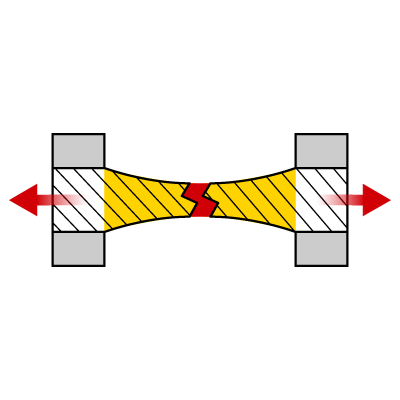
Tensile strength indicates the maximum stress a material can withstand before fracturing. It is expressed in N/mm² (Newtons per square millimetre). The higher the value, the "stronger" or "harder" the material.
The specification "at room temperature" means this value was measured under normal conditions (approx. 20 °C) – i.e. without special heat or cold exposure.
| Material | Tensile strength (approx.) | Note |
|---|---|---|
| Aluminium (pure) | 60–120 N/mm² | very soft, easily deformable |
| Aluminium alloys | 200–500 N/mm² | stronger, common in engineering |
| Copper | 200–250 N/mm² | soft, easily workable |
| Structural steel (unalloyed, S235) | ≈ 360 N/mm² | standard in construction |
| Quenched and tempered steels | 800–1100 N/mm² | high strength, harder to machine |
| Stainless steel (e.g. 1.4301, V2A) | 500–700 N/mm² | tough, corrosion-resistant |
| Titanium alloys | 900–1200 N/mm² | very strong, light, difficult to machine |
| Carbide | >1500 N/mm² | extremely strong, brittle, hard to machine |