
Tap
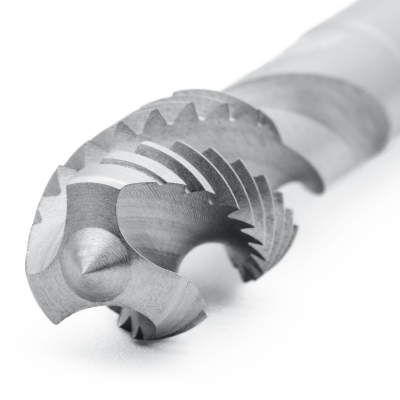
A tap is a chip-removing precision tool for producing internal threads in pre-drilled holes. During thread cutting, the tap removes material from the hole wall to form the characteristic helix of the thread. It is one of the fundamental tools in metalworking and is used in virtually all areas of mechanical and plant engineering.
A tap consists of a shank, a clamping section and the cutting section. The cutting edges are arranged in flutes that both transport chips and allow cutting fluid to be applied. The shape, length and pitch of the cutting edges are determined by the thread standard and workpiece material. In practice, taps are often used in sets to achieve consistent thread quality.
Types and application:
- Hand taps: For manual use, usually in three stages – taper, plug and bottoming tap. They allow controlled and low-force machining, especially for single-piece production and repair work.
- Machine taps: For use in drilling machines, thread cutting units or CNC systems. They cut the internal thread in a single pass and are suitable for series production. Straight flutes (for through holes) or spiral flutes (for blind holes) are used depending on the hole type.
- Single-cut taps: Combined tools incorporating all cutting stages in one tool. They enable fast and precise thread cutting in a single pass, both manually and by machine.
Materials and coatings:
Taps are generally made from HSS or HSSE. For particularly hard or abrasive materials, carbide taps are used. Hard coatings such as TiN, TiCN or TiAlN increase wear resistance, improve heat dissipation and extend tool life.
Standards and thread types:
The most common thread form is the metric ISO thread (M thread) to DIN 13. There are also many international systems such as UNC and UNF (American) or G / BSP (British). Each tap is matched to the geometry, flank angle and pitch of the respective thread.